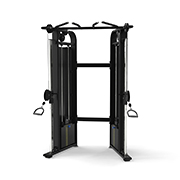
If you’ve ever stepped into a gym and felt overwhelmed by the variety of equipment, the cable machine (often called a “lat pulldown machine” in some regions, but more commonly known as a cable crossover machine or cable crossover machine in Chinese gyms) is likely one of the most versatile yet underused tools. Unlike fixed-weight machines that limit movement paths, cable machines use adjustable pulleys and weight stacks to let you perform hundreds of exercises—making them a favorite among both beginners and seasoned fitness enthusiasts. To help you make the most of this “all-in-one” equipment, let’s break down its structure, working principles, and practical usage tips.

Understanding the Cable Machine’s Structure & How It Works
At first glance, a standard cable machine consists of four core components:
Weight Stack: Usually located at the base of each side, these stacked weights provide resistance. The weight is adjusted via a pin, allowing you to choose a load that fits your fitness level—from 5 lbs for warm-ups to over 200 lbs for advanced training.
Pulleys: The machine’s “heart,” pulleys are attached to vertical rails and can be adjusted to different heights (from floor level to above shoulder height). This adjustability is key to its versatility, as it changes the direction of resistance and targets different muscle groups.
Cables & Attachments: Thick, durable cables connect the pulleys to the weight stack. They come with a range of detachable attachments, such as straight bars, D-handles, rope handles, and ankle cuffs—each designed for specific exercises (e.g., rope handles for tricep pushdowns, straight bars for lat pulldowns).
Stability Frame: A sturdy steel frame supports the entire system, ensuring safety during heavy lifts. Most machines also have foot plates or padded seats to keep you stable while working out.
The science behind cable machines is simple: when you pull or push the cable, you lift the selected weight stack via the pulley system. Unlike free weights (like dumbbells), which rely on gravity for resistance, cables provide constant tension throughout the exercise. This means your muscles work harder for longer—great for building strength and muscle definition.
Essential Usage Tips for Beginners & Pros
Start with Light Weights: If you’re new to cable machines, begin with a light weight (10–15 lbs) to practice proper form. Rushing to heavy loads can lead to strain, especially in the shoulders or back.
Adjust Pulleys Correctly: Match the pulley height to your exercise:
Low pulleys (floor level): Ideal for exercises like cable rows (targeting upper back) or leg curls (targeting hamstrings).
Mid pulleys (chest/shoulder height): Perfect for chest flyes, lateral raises, or bicep curls.
High pulleys (above head): Great for lat pulldowns, tricep overhead extensions, or face pulls (for shoulder health).
Choose the Right Attachment: Using the wrong attachment can reduce exercise effectiveness or cause discomfort. For example, use a wide-grip straight bar for lat pulldowns (to target the lats) and a D-handle for single-arm rows (to isolate one side of the back).
Maintain Proper Posture: Keep your core tight, shoulders relaxed (not hunched), and spine neutral during every exercise. Avoid leaning back excessively during cable rows or rounding your back during tricep pushdowns—this protects your lower back and ensures you’re targeting the right muscles.
Control the Movement: Don’t let the weight stack “drop” quickly after each rep. Lower the cable slowly (2–3 seconds) to maximize muscle engagement and reduce joint stress.
Final Thoughts
The cable machine is a gym staple for a reason—it adapts to nearly every fitness goal, from building muscle to improving flexibility. By understanding its structure, leveraging its pulley system, and following proper form, you can turn this single piece of equipment into the center of your workout routine. Whether you’re a beginner learning the ropes or a pro looking to mix up your training, the cable machine has something to offer. So next time you’re at the gym, skip the crowded dumbbell area and give this versatile tool a try—your muscles will thank you!