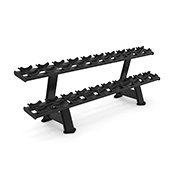
In recent years, home and commercial strength training spaces have seen a surge in demand for power racks. As a versatile and safe core equipment for weightlifting, a well-chosen power rack can elevate your training experience, whether you’re a beginner aiming to build foundational strength or an advanced lifter chasing new personal records. This guide breaks down key factors to help you select the perfect power rack for your needs.

Why Invest in a Power Rack?
Power racks stand out for their unmatched safety, especially for solo training. With adjustable safety bars and spotter arms, they act as a “virtual spotter,” catching heavy barbells if you lose control—critical for lifts like squats and bench presses. Their versatility is another highlight: you can perform a full-body workout, from deadlifts and overhead presses to pull-ups (with integrated bars) and accessory exercises using attachments. Unlike basic squat stands, power racks offer superior stability, supporting heavier weights without wobbling, making them suitable for long-term progression.
Choosing the Right Type of Power Rack
1. Home Use Power Racks
Designed for compact spaces, home power racks are narrower (usually 48-60 inches wide) and lighter, but still sturdy enough for most home lifters (weight capacity 500-1000 lbs). Many feature foldable or wall-mounted designs to save floor space. They often come with essential attachments like J-hooks and basic safety bars, with optional add-ons (e.g., landmine, dip bars) for expanded functionality. Ideal if you train alone and have limited room.
2. Commercial Power Racks
Built for high-traffic gyms, commercial racks are made of thick-gauge steel (11-14 gauge) with weight capacities over 1000 lbs. They’re wider and more durable, with multiple attachment points for band pegs, plate storage, and pull-up bars. Some models include integrated cable machines for added versatility. While bulkier and pricier, they withstand daily heavy use and cater to diverse member needs.
3. Half Racks vs. Full Racks
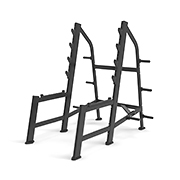
Half Racks: Open at the front, making them easier to access for lifts like overhead squats. They take up less space than full racks but still offer solid stability. Great for home gyms or small commercial spaces.
Full Racks (Cage Racks): Enclosed on all sides with front and back columns, providing maximum stability for ultra-heavy lifts (e.g., 1500+ lbs). They’re the top choice for serious powerlifters but require more floor space.
Key Features to Prioritize
1. Steel Thickness & Weight Capacity
Opt for racks with at least 12-gauge steel (thicker = more durable). Home users should aim for a weight capacity of 800+ lbs (to accommodate progression), while commercial users need 1000+ lbs.
2. Adjustability
Look for racks with 1-2 inch increment holes on the uprights—this lets you fine-tune J-hook and safety bar heights for different exercises and body types. Quick-adjust pins or spring clips make height changes faster.
3. Attachments & Storage
Essentials: J-hooks (prefer those with rubber inserts to protect barbells) and safety bars/spotter arms.
Useful Adds: Pull-up bars (check grip variety: wide, narrow, neutral), plate storage arms (keep weights accessible), and band pegs (for resistance training).
4. Space Requirements
Measure your training area before buying. A home full rack needs roughly 4x6 feet of space (plus room to move around), while a half rack can fit in 3x5 feet. Wall-mounted racks save floor space but require sturdy wall support.
Final Tips
Always bolt down your power rack (especially full racks) to the floor for maximum stability. Check customer reviews for long-term durability, and choose brands with good after-sales support (warranties, replacement parts). By balancing your space, budget, and training goals, you’ll find a power rack that supports your strength journey for years.