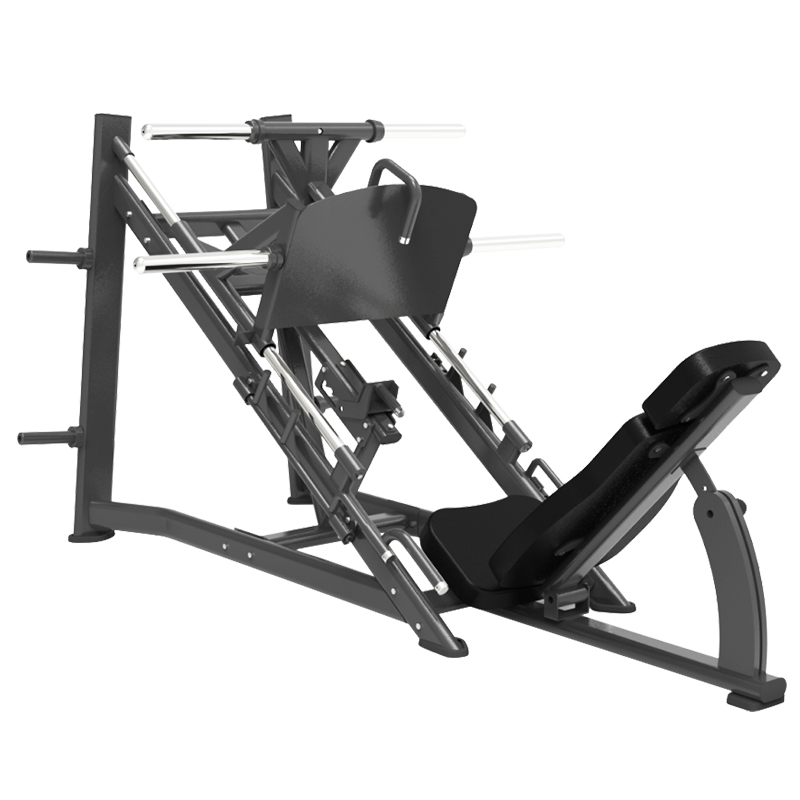
The leg press is a gym staple for lower-body growth, but most lifters leave gains on the table by skipping key setup tweaks. It’s not just about stacking more weight—small, intentional adjustments target your quads deeper, boost muscle activation, and cut down on wasted effort. Whether you’re a beginner or a seasoned lifter, these three pro tips will transform your leg press from a "meh" exercise to a quad-crushing powerhouse.

1. Fine-Tune Your Foot Placement for Quad Focus
Your feet’s position dictates which muscles take the brunt of the work—and most people place them too high or too wide, shifting tension to glutes and hamstrings instead of quads. For maximum quad activation:
Width: Set your feet shoulder-width apart (or slightly narrower) to keep stress on the front of your thighs. Wider stances prioritize inner thighs and glutes.
Height: Position feet mid-platform—not too high (which shifts to glutes) or too low (which strains knees). Align your heels with the bottom edge of the platform for a full range of motion.
Toes: Point them slightly outward (15–30 degrees) to avoid knee pain while keeping quads engaged. Avoid pointing straight ahead, which limits muscle recruitment.
A study in the Journal of Strength and Conditioning Research found mid-width, mid-height foot placement increased quad activation by 23% compared to wider, higher positions.
2. Adjust Seat Depth to Maximize Range of Motion (ROM)
Seat depth is the most overlooked leg press adjustment—and the biggest culprit behind weak quad stimulus. Too far back, and you’ll struggle to push without arching your lower back; too close, and you’ll never fully stretch or contract your quads.
Perfect Position Check: Sit with your back pressed flat against the pad. Place your feet as above, then bend your knees to 90–100 degrees (like sitting in a chair). Your knees should track over your toes (not cave inward or flare out) and never go past your toes.
Why It Matters: A full ROM—lowering the platform until your quads stretch, then pressing until legs are almost straight (avoid locking knees)—triggers more muscle fibers. Shallow reps only hit the top third of your quads, leaving most of the muscle untrained.
3. Dial In Back and Core Bracing to Stabilize & Isolate
The leg press isn’t a "relax and push" exercise—stabilizing your upper body keeps tension on quads and prevents injury.
Back Contact: Press your entire back (shoulders, upper back, and lower back) firmly into the pad. Avoid lifting your hips or arching excessively—this shifts load to your lower back instead of legs.
Core Bracing: Inhale deeply before pressing, and tighten your core like someone’s about to punch your stomach. Hold this brace through the entire rep. A stable core eliminates sway, so every ounce of effort goes to your quads.
Grip: Grip the handles tightly to reinforce upper-body stability. This subtle tweak keeps your torso locked in, so you can focus on squeezing quads at the top of each rep.
Final Rep Tip: Slow the Eccentric
Pair these adjustments with a controlled eccentric (lowering) phase—3 seconds to lower the platform—and you’ll amplify quad burn. Rushing the eccentric skips muscle breakdown, which is key for growth.
The leg press’s beauty is its accessibility, but mastery lies in the details. By tweaking your foot placement, seat depth, and bracing, you’ll turn every rep into a quad-building opportunity. Ditch the "heavy at all costs" mindset—these adjustments will make your legs work harder without sacrificing form. Your quads will thank you.