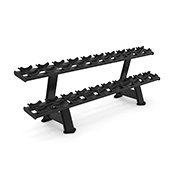
Walk into any gym, and two tools stand out as foundational: the barbell and the dumbbell. These "fitness giants" dominate workout routines worldwide, but choosing between them depends on your goals, experience, and body’s needs. Let’s break down their key differences to help you decide.

1. Strength and Muscle Growth: The Heavyweight Battle
For raw power and maximal muscle gains, the barbell reigns supreme. Its rigid design lets you load hundreds of pounds, making it ideal for compound lifts like squats, deadlifts, and bench presses—moves that engage multiple muscle groups at once. This heavy loading triggers significant muscle fiber activation, perfect for advanced lifters chasing PRs (personal records) or athletes building explosive strength.
Dumbbells, by contrast, excel at balanced development. Since each arm/leg works independently, they fix muscle imbalances that barbells (which force bilateral movement) might hide. They’re also great for hypertrophy (muscle size) through higher reps and targeted isolation exercises like bicep curls or lateral raises. While you can’t lift as much weight, the stability challenge boosts muscle control.
2. Accessibility and Safety: For Beginners and Pros Alike
Beginners often find dumbbells less intimidating. They’re lighter, easier to grip, and require less core stability than barbells—reducing injury risk when learning form. Moves like dumbbell lunges or shoulder presses let you adjust range of motion to avoid joint strain, a big plus for those new to strength training.
Barbells demand more technique. A poorly executed barbell squat or overhead press can strain your back or shoulders. However, with a spotter and proper form, they’re safe even for intermediates. They also offer consistency: the fixed bar path helps build muscle memory for complex lifts.
3. Versatility and Space: Gym vs. Home Workouts
Dumbbells are the ultimate home gym hero. Adjustable dumbbells (like Bowflex SelectTech) replace a whole rack, saving space while covering everything from warm-ups to heavy sets. They’re also portable—great for travelers who want to stay on track.
Barbells need more room and equipment (racks, plates, benches) to reach their full potential. This makes them better suited for commercial gyms, where you can customize weight loads for progressive overload. If you have a home gym with space, though, a barbell set is a long-term investment for full-body training.
4. Functional Fitness: Moving Like You Live
Dumbbells shine for functional strength—the kind you use in daily life (carrying groceries, lifting kids). Unilateral exercises (one-arm rows, single-leg deadlifts) improve balance and coordination, translating to better performance in sports and daily activities.
Barbells build "gym strength" that’s transferable but more focused on pure power. Think of a weightlifter hoisting a barbell vs. a hiker carrying a backpack—both strong, but with different skill sets.
The Verdict: It’s Not Either/Or
For most lifters, the best approach is both. Use barbells for heavy compound lifts to build a strength base, then add dumbbells for imbalance correction and targeted work. Beginners can start with dumbbells to master form, then progress to barbells. Advanced lifters can cycle between them to avoid plateaus.
Ultimately, the "better" tool depends on your goals. Want to lift heavy and build mass? Grab the barbell. Need balance, versatility, or a home workout? Dumbbells are your match. Whichever you choose, consistency beats equipment every time.