If you’re looking to build chest strength, improve upper-body definition, or complement your bench press routine, the seated chest press machine is a gym staple worth mastering. Unlike free weights, it offers stability, reduces injury risk, and lets you focus on muscle contraction—making it ideal for beginners and seasoned lifters alike. This guide breaks down everything you need to know to use it effectively.

1. Understanding the Seated Chest Press Machine
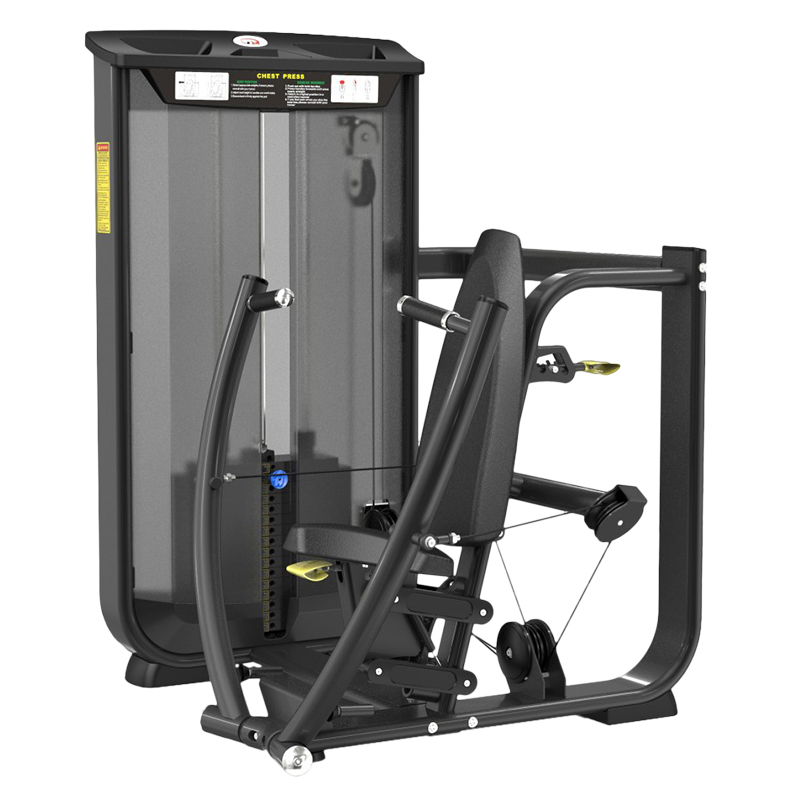
First, familiarize yourself with the machine’s key parts: padded seat, backrest, adjustable handles, and weight stack. Most models let you adjust seat height (critical for proper form) and handle width (to target different chest areas). The goal? Push the handles away from your chest using your pectoralis major (chest muscles), anterior deltoids (front shoulders), and triceps.
2. Step-by-Step Proper Form
Adjust the seat: Sit upright, pressing your back firmly against the backrest. Adjust height so the handles align with the midpoint of your chest—your elbows should bend at 90 degrees when gripping them.
Grip and posture: Grab the handles with an overhand grip (palms forward), slightly wider than shoulder-width. Engage your core, keep your feet flat on the floor, and avoid arching your lower back.
The movement: Exhale as you push the handles forward until your arms are almost fully extended (don’t lock your elbows). Pause for 1 second, then inhale as you slowly return to the starting position—letting the weights lower with control (this eccentric phase builds muscle!).
3. Common Mistakes to Avoid
Seat height mismatch: If handles are too low, you’ll strain your shoulders; too high, and you’ll underwork your chest. Test by placing a fist between your chest and the handles at rest—if it fits, you’re set.
Using momentum: Swinging your body or jerking the handles reduces muscle engagement and risks injury. Keep movements slow and deliberate.
Locking elbows: Fully extending elbows puts unnecessary stress on joints. Stop just before your arms straighten.
4. Benefits of the Seated Chest Press
Stability for beginners: No need to balance weights, so you can learn proper chest activation without struggling.
Isolation and control: Targets chest muscles more directly than push-ups or free-weight presses for balanced growth.
Injury rehabilitation: Gentle on shoulders (when form is correct), making it great for post-injury training or active recovery.
5. Tips for Progression
Increase weight gradually: Add 5–10 lbs when you can complete 3 sets of 12 reps with ease.
Adjust handle width: Narrow grips (shoulder-width) focus on triceps and inner chest; wide grips target outer chest.
Supersets for intensity: Pair with push-ups or cable crossovers to boost muscle fatigue and growth.
Final Note
Consistency beats heavy weights—prioritize form first, then build intensity. Whether you’re new to the gym or refining your routine, the seated chest press machine is a versatile tool to boost upper-body strength and definition.