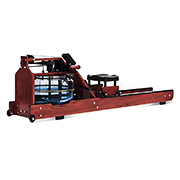
If you’ve ever walked past a rowing machine at the gym and wondered, “Is that just for arms?” you’re not alone. For years, this piece of equipment has been underestimated—many people assume it only targets upper-body muscles, but the truth is far more impressive. A rowing machine delivers a low-impact, full-body workout that engages over 86% of your muscles when used correctly. Let’s break down exactly which muscle groups it targets, and why it’s a game-changer for fitness goals from strength building to cardio.

1. The Lower Body: Your Powerhouse
Contrary to popular belief, rowing starts with your legs—not your arms. The “drive” phase (when you push back from the starting position) relies heavily on your quads, hamstrings, and glutes. As you extend your knees and hips, your quads (front of the thighs) and glutes (buttocks) fire to generate force, while your hamstrings (back of the thighs) stabilize the movement. Even your calves get in on the action: they engage to keep your feet planted firmly on the footrests, ensuring a stable base for each stroke. Over time, this builds lean muscle in the legs and improves overall lower-body strength—perfect for runners, cyclists, or anyone looking to boost lower-body power without high-impact stress.
2. The Core: Your Stabilizer
A strong core is non-negotiable for proper rowing form, and the machine puts this muscle group to work with every stroke. Your rectus abdominis (six-pack muscles), obliques (side abs), and transverse abdominis (deep core) all activate to keep your torso straight and prevent rounding or twisting. During the “recovery” phase (when you return to the starting position), your core controls the movement, ensuring you don’t collapse forward. This constant engagement not only strengthens your core but also improves posture—a bonus for anyone who sits at a desk all day.
3. The Upper Body: More Than Just Arms
While your legs and core do the heavy lifting, your upper body plays a key role in finishing each stroke. As you pull the handle toward your chest, your latissimus dorsi (lats)—the large muscles in your back—are the primary drivers, helping to build width and strength in your upper back. Your biceps and forearms also engage to grip and pull the handle, but they’re secondary to your lats (good news for anyone who doesn’t want bulky arms!). Additionally, your shoulders (deltoids) and triceps stabilize the movement, ensuring proper form and preventing injury. Over time, this balanced upper-body workout can help reduce back pain and improve upper-body mobility.
Why Rowing Beats Other Workouts
What sets rowing apart is its ability to combine cardio and strength training in one session. Unlike running (which focuses mostly on legs and cardio) or weightlifting (which often targets specific muscle groups), rowing gets your heart rate up while building lean muscle across your entire body. It’s also low-impact, making it gentler on your joints than activities like running or jumping rope—ideal for beginners, older adults, or anyone recovering from an injury.
Final Tips for Maximum Muscle Engagement
To get the most out of your rowing workout, focus on form: start with your knees bent, back straight, and arms extended; push through your legs first, then lean back slightly, and finally pull the handle to your chest. Reverse the movement slowly to avoid momentum. Aim for 20-30 minutes of rowing 3-4 times a week, and you’ll soon notice improvements in strength, endurance, and overall fitness.
In short, a rowing machine isn’t just another gym tool—it’s a full-body powerhouse. Whether you’re aiming to build muscle, burn calories, or boost cardiovascular health, it delivers results that few other machines can match. So next time you see that rowing machine, don’t walk past it—give it a try, and feel your entire body work.