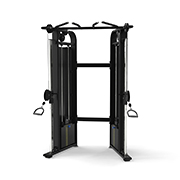
The biceps curl machine is a gym staple for sculpting arm definition—but nail the form, or you’ll waste effort (or worse, risk strain). Whether you’re a beginner or a regular, mastering this tool can take your arm gains to the next level. Here’s your step-by-step guide to proper technique, critical pitfalls to skip, and when to use this machine for best results.

Step 1: Nail the Setup FirstStart by adjusting the seat height so your forearms rest perfectly parallel to the floor when gripping the handles (your elbows should align with the machine’s pivot point). Press your entire back flat against the pad—no arching (which shifts tension to your lower back)—and plant your feet shoulder-width apart for stability. Skip the “one-size-fits-all” approach: even a 1-inch height tweak can make or break muscle activation.
Step 2: Execute the Curl With ControlExhale as you curl the handles toward your shoulders, focusing on squeezing your biceps as hard as possible at the top (hold for 1 full second to maximize contraction). Inhale as you lower the weight slowly (2–3 seconds per rep)—resist the urge to let the machine “snatch” the weight back. A key rule: keep your elbows fixed in place (no swinging forward or backward) to keep tension only on your biceps.
3 Critical Mistakes to Ditch Immediately
Momentum cheating: Yanking the weight with your shoulders or leaning back takes tension off your biceps—you’re just moving weight, not building muscle.
Overloading too soon: Lifting heavy might feel impressive, but it forces sloppy form (and raises injury risk). Start with 50% of your “max” to lock in technique first.
Shortening the range of motion: Fully extend your arms (without locking your elbows) at the bottom—partial reps mean partial gains.
Best Use Scenarios for the Biceps Curl MachineThis tool isn’t just for “arm day”—it shines in specific gym routines:
Beginner onboarding: New lifters can learn bicep contraction without balancing free weights (great for building mind-muscle connection).
Post-injury recovery: If you have shoulder/back limitations, the machine’s fixed path reduces strain (clear it with a trainer first!).
Finisher sets: After dumbbell curls, use the machine for a high-rep (15–20) finisher—its stability lets you push biceps to fatigue without form breakdown.
Form refinement: Even experienced lifters use it to fix “swinging elbows” (the fixed pivot enforces proper elbow placement).
Pair this machine with 3–4 sets of 10–12 reps (adding weight only when you can complete all reps with perfect form) and you’ll build tighter, stronger biceps without the guesswork. For extra intensity, try a “drop set” (lower the weight by 20% after failure) on your last set.