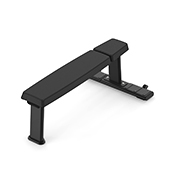
If you’re tired of floor crunches that strain your back or fail to target deep core muscles, a home abdominal bench (or “ab bench”) is the upgrade your routine needs. This compact, versatile tool turns casual home workouts into focused, effective sessions—no gym membership required.

Unlike floor exercises, an abdominal bench uses a decline (or adjustable incline) to increase resistance, forcing your rectus abdominis, obliques, and lower abs to work harder. The padded support keeps your spine aligned, reducing injury risk while letting you move through a full range of motion for deeper muscle activation. Most models are foldable (ideal for small apartments) and built with heavy-duty steel to support 300+ lbs, making them both space-saving and durable.
How to Use Your Ab Bench: Step-by-Step Exercises
Master these moves to maximize your core gains:
Standard Decline Crunch
Adjust the bench to a slight decline (beginners start at 15–20 degrees; advanced users up to 45 degrees). Secure your feet under the padded rollers.
Lie back with your lower back pressed to the pad; cross arms over your chest (avoid pulling your neck).
Exhale as you contract your abs, lifting your shoulders toward your knees (keep your lower back on the bench).
Inhale and lower slowly with control. Do 3 sets of 12–15 reps.
Reverse Crunch (Lower Abs Focus)
Lie back with your head near the top of the bench; hold the side handles for stability.
Bend knees to 90 degrees, feet off the ground.
Engage your lower abs to lift your hips toward your chest (avoid swinging legs).
Lower hips slowly. Complete 3 sets of 10–12 reps.
Oblique Crunch (Side Abs)
Perform a standard crunch, but twist your torso as you lift: bring your right shoulder toward your left knee.
Alternate sides with each rep to target both obliques evenly. Do 3 sets of 12 reps per side.
Lying Leg Raises
Lie flat on the bench, holding the handles behind your head.
Keep legs straight (or slightly bent) and lift them until parallel to the floor.
Lower slowly (don’t let legs drop). Aim for 3 sets of 10–12 reps.
For advanced users, add a weight plate to your chest during crunches to boost resistance.
Critical Safety & Performance Tips
Avoid common mistakes to stay safe and see results:
Warm Up First: Spend 5–10 minutes jogging in place or doing arm circles to loosen your core and prevent strain.
Form Over Speed: Slow, controlled movements (2 seconds up, 3 seconds down) activate muscles better than fast, momentum-driven reps. Never pull your neck with your hands—use light finger placement behind your ears.
Adjust for Your Level: Beginners start with a shallow decline; increase the angle only when you can complete 15 reps with perfect form.
Rest & Recover: Treat your abs like any other muscle—train 2–3 non-consecutive days per week (overtraining reduces growth).
Check Equipment: Before each use, ensure the bench is stable, foot rollers are tight, and padding is intact. Avoid loose clothing that could catch on parts.
Listen to Your Body: Stop immediately if you feel sharp back pain, neck strain, or dizziness. Mild muscle fatigue is normal, but pain is a warning sign.
Forget complicated machines—this bench lets you train your core, improve posture, and even ease lower back tension (a lifesaver for desk workers) all in one. Ready to trade weak floor crunches for a stronger, defined core? A home abdominal bench is the affordable, space-saving tool that makes consistent ab training actually doable.