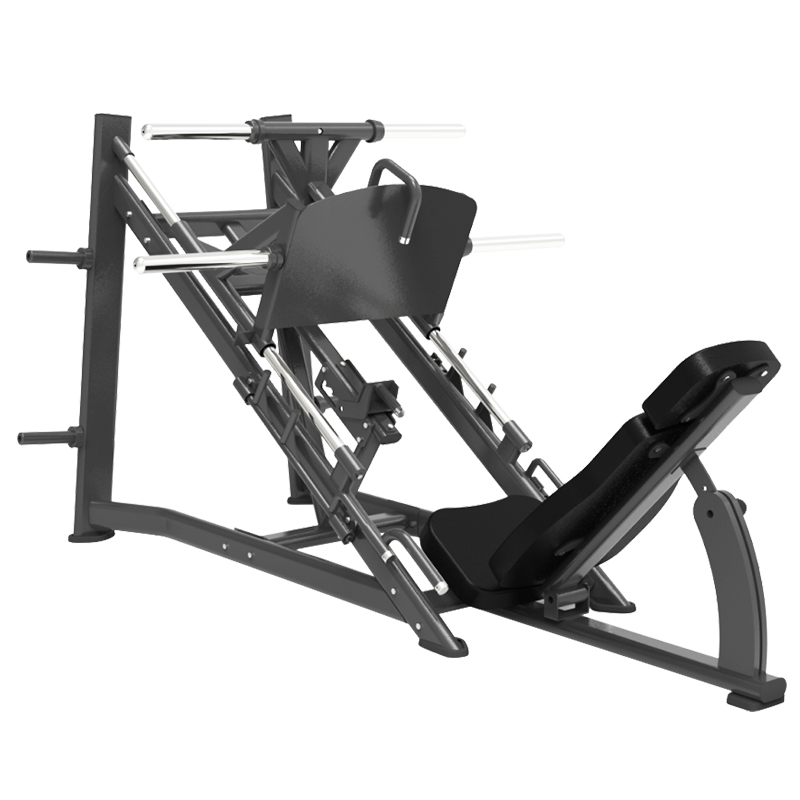
The hack squat is a machine-based lower-body staple that targets quads, glutes, and hamstrings while minimizing spinal stress. Unlike back squats, it locks your torso in place, making it ideal for lifters of all levels—if you nail the form. Follow this guide to master the movement and steer clear of common errors that kill gains or cause injury.

First, set up the machine properly. Adjust the seat and shoulder pads so your feet are shoulder-width apart on the footplate, toes slightly turned out. Your knees should align with your toes, and your back should press firmly against the pad—no arching or rounding. Grip the side handles, engage your core, and unrack the weights by pushing through your heels.
Lower your body slowly by bending your knees until they form a 90-degree angle. Keep your chest up and your weight distributed evenly across your entire foot—don’t let your heels lift off the plate. Pause for 1 second, then drive through your heels to return to the starting position. Exhale as you push up; inhale as you lower down.
Now, let’s fix the 3 most common hack squat mistakes that ruin your workout:
Heels Lifting Off the Footplate
This shifts tension to your knees instead of your quads and glutes. To fix it, adjust your foot placement slightly higher on the plate. Focus on pushing through your heels throughout the entire rep.
Rounding or Arching Your Spine
A loose core leads to spinal strain. Brace your core tightly before you start the movement. Keep your back glued to the pad for the full range of motion.
Going Too Deep (or Not Deep Enough)
Going past 90 degrees can strain your knees if you lack flexibility. Stopping too early limits muscle activation. Aim for that 90-degree sweet spot where your thighs are parallel to the floor.
Stick to 3–4 sets of 8–12 reps for muscle growth, or 4–5 sets of 4–6 reps for strength. Pair hack squats with lunges or leg presses for a complete leg day.