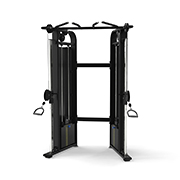
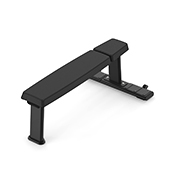
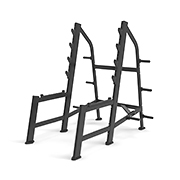
When stepping into the gym, many fitness enthusiasts, especially beginners, often confuse the shoulder press and chest press—two staple strength-training movements. Both involve pushing weights with gym equipment, but they target distinct muscle groups, follow different mechanics, and serve unique fitness goals. Understanding their core differences is key to optimizing your workout routine and avoiding injury.

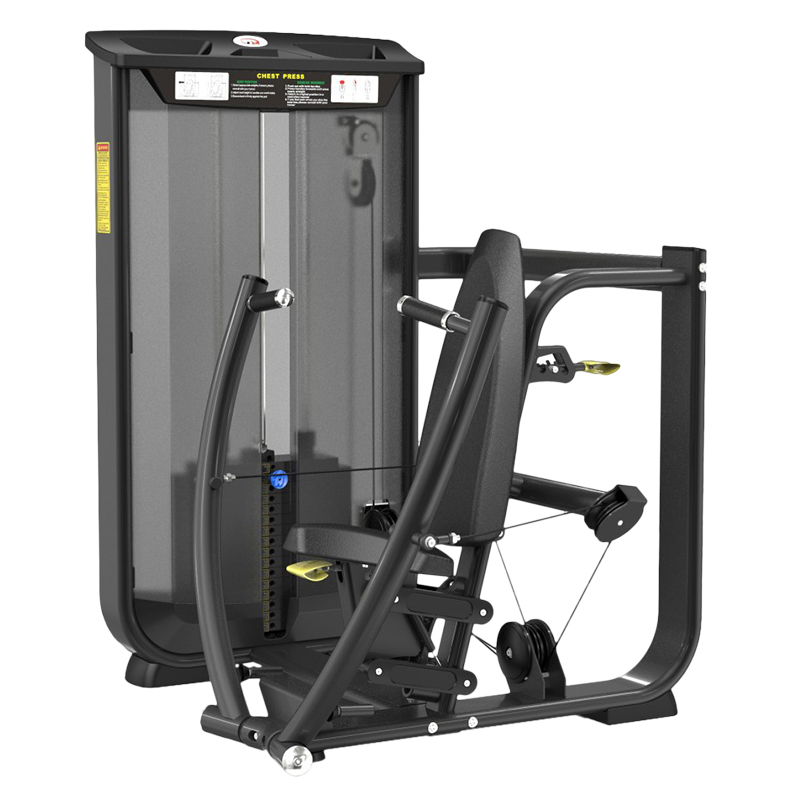
The first core difference lies in target muscle groups. The chest press is a chest-dominant exercise. Whether using a flat bench press machine or a barbell, it primarily activates the pectoralis major and minor (chest muscles), with secondary engagement of the anterior deltoids (front shoulders) and triceps brachii (back of the arms). On the contrary, the shoulder press—typically performed with a shoulder press machine or dumbbells—centers on the deltoid muscles (anterior, lateral, and posterior heads of the shoulders). It also recruits the triceps and upper trapezius muscles to stabilize the upper body, making it the go-to move for building shoulder width and definition.
Second, the two movements differ significantly in exercise mechanics and body posture. For the chest press, you need to lie flat on a bench, grip the handles slightly wider than shoulder-width, and push the weight upward until your arms are almost fully extended (avoid locking the elbows). Your back should stay pressed against the bench, and your feet flat on the floor for balance. In contrast, the shoulder press requires a seated or standing position with your feet shoulder-width apart. You start with the weights at shoulder level, elbows bent at 90 degrees, then push vertically upward until your arms are overhead, keeping your core tight to prevent excessive arching of the lower back.
The third core difference is fitness goals and application scenarios. If your aim is to build a thicker, more defined chest—for a balanced upper-body physique or to enhance pushing power for sports like basketball or boxing—the chest press is your top choice. It’s ideal for intermediate to advanced lifters looking to add muscle mass to the chest. Meanwhile, the shoulder press is perfect for those wanting to strengthen the shoulders, improve upper-body stability, or correct postural imbalances (e.g., rounded shoulders from sitting at a desk). It’s also a foundational exercise for functional fitness, as strong shoulders support daily movements like lifting objects overhead.
In conclusion, neither movement is “better” than the other—they just serve different purposes. By mastering these three core differences, you can tailor your gym routine to meet your specific fitness goals, whether it’s sculpting a broad chest or building strong, shapely shoulders. Always prioritize proper form over heavy weights to maximize results and stay safe during training.