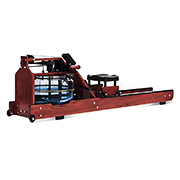
If you’re looking for a full-body workout that’s low-impact but high results, a rowing machine (or ergometer) is one of the best pieces of equipment you can use. Unlike many gym machines that target only one muscle group, rowing engages nearly every major muscle in your body—making it efficient for building strength, boosting endurance, and burning calories. But exactly what muscles does a rowing machine work? Let’s break down the key muscle groups activated during every stroke, plus tips to maximize your workout.

First, it’s important to understand that a rowing stroke has four distinct phases: the catch, drive, finish, and recovery. Each phase targets different muscles, but together they create a seamless, full-body movement. Contrary to popular belief, rowing is not just an upper-body workout—it relies heavily on your lower body for power, your core for stability, and your upper body for control.
The lower body is the engine of your rowing stroke, responsible for generating most of the power. During the drive phase (when you push back from the catch), your quads (quadriceps femoris) engage to extend your knees, while your glutes (gluteus maximus, medius, and minimus) and hamstrings (biceps femoris, semitendinosus, semimembranosus) contract to hip-hinge and pull your body back. Your calves (gastrocnemius and soleus) also activate to stabilize your feet on the footrests, especially as you push through your heels.
Next, your core muscles are critical for maintaining proper form and transferring power from your lower body to your upper body. Your rectus abdominis, obliques, and transverse abdominis engage throughout the entire stroke to keep your torso upright and stable—preventing you from hunching or twisting. Your lower back muscles (erector spinae) also work hard to support your spine, especially during the finish phase when your torso leans back slightly.
The upper body handles the “pull” part of the stroke and adds control. As you move into the finish phase, your latissimus dorsi (lats)—the large muscles in your back—contract to pull the handle toward your lower chest. Your rhomboids and trapezius (upper back muscles) engage to retract your shoulder blades, improving posture and preventing shoulder strain. Your biceps (brachialis and brachioradialis) and forearms (flexors and extensors) grip the handle and assist in pulling, while your triceps stabilize your elbows during the recovery phase.
Even your postural and stabilizer muscles get a workout. Your deltoids (shoulder muscles) stabilize your shoulders, your serratus anterior helps protract your shoulder blades during the recovery, and your hip flexors (iliopsoas) stretch and engage as you return to the catch position.
To get the most out of your rowing machine and ensure you’re targeting all these muscles, focus on proper form: keep your core tight, push through your heels first, pull with your back (not just your arms), and maintain a smooth, consistent rhythm. Avoid hunching your shoulders, pulling with your arms alone, or locking your knees—these mistakes can reduce muscle engagement and increase injury risk.
Whether you’re a beginner or an experienced athlete, rowing is a versatile workout that targets multiple muscle groups at once. It’s low-impact on your joints, making it ideal for all fitness levels, and it can be adjusted to focus on strength, endurance, or cardio. By understanding which muscles a rowing machine works, you can tailor your workouts to meet your goals and get the most out of every stroke.