If you have been training your chest regularly for months yet still see barely any progress, flat chest muscles and slow muscle growth must trouble you a lot. Many fitness enthusiasts spend plenty of time doing bench presses, push-ups and chest flyes every week, but their chest muscles stay the same size without obvious fullness and thickness. In fact, it is not that chest training is hard, but most people ignore several core key points during workouts. These easily overlooked details are exactly the main reasons why your chest gains hit a bottleneck.

The first ignored detail is improper movement range control. A large number of exercisers only pursue heavy weight and shorten the movement track when training chest muscles. They rush to push the barbell up quickly without fully lowering it to stretch the chest muscles completely. Chest muscle growth needs sufficient stretching and contraction stimulation. Limited movement range can only train partial muscle fibers, failing to activate the entire pectoralis major and minor muscles. You should slow down the movement rhythm, fully stretch the chest at the lowest position and squeeze the chest hard at the highest position to maximize muscle stimulation.
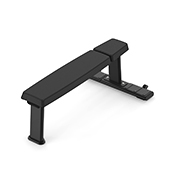
Second, unreasonable training angle arrangement is a common mistake. Many people always stick to flat bench press and ignore incline and decline chest movements. The chest muscle is divided into upper chest, middle chest and lower chest. Single-angle training will lead to unbalanced muscle development, making the chest look collapsed and lacking three-dimensional sense. Reasonably matching incline press to shape upper chest and decline movement to carve lower chest can make the whole chest more full and layered.
Third, wrong breathing rhythm affects training efficiency. Most beginners hold their breath blindly when pushing heavy weights, which will not only increase physical pressure but also disperse muscle force. The standard breathing way is to inhale slowly when lowering the weight and exhale forcefully when pushing upward to contract the chest muscles. Stable breathing can help you maintain stable body posture and concentrate strength on the chest instead of relying on arm and shoulder strength to exert force.
Fourth, insufficient rest and excessive training hinder muscle repair. Muscle grows during rest rather than training. Some fitness lovers train chest muscles two or three times a week in pursuit of rapid gains, resulting in chronic muscle fatigue. The chest belongs to large muscle groups, which needs 48 to 72 hours of rest and recovery time after training. Blindly increasing training frequency will cause muscle overtraining, inhibit protein synthesis, and make it impossible to achieve effective muscle gain.
Fifth, unscientific diet and nutrient supplementation are easy to be neglected. Working out hard without matching enough protein and calorie intake is all in vain. After chest training, the body needs sufficient high-quality protein to repair damaged muscle fibers. If daily protein intake is insufficient, even with standard movements and sufficient training volume, it is difficult to expand muscle volume. Meanwhile, controlling fat intake properly can avoid excess body fat covering the chest muscles and make muscle lines more obvious.
In conclusion, chest muscle growth never depends on blind brute force training, but lies in standardized movements, reasonable training plans, correct habits and scientific diet. Give up wrong training modes, pay attention to these five overlooked training details, adjust your workout status in time, and you will soon break through the growth plateau and easily train full, thick and well-defined chest muscles.