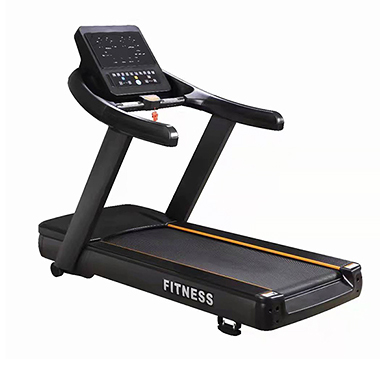
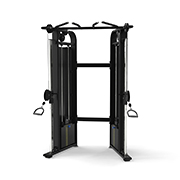
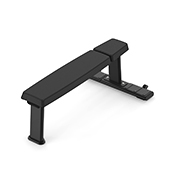
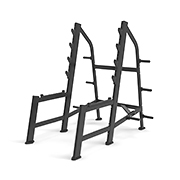
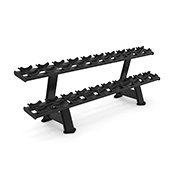
Many fitness enthusiasts struggle to choose between commercial and home fitness equipment. Some buyers assume the only gap lies in price and size, while others believe premium home machines can fully replace gym-grade devices. In fact, commercial and home workout gears are engineered with distinct design philosophies, and their fundamental differences cover durability, daily workload, functional layout and after-sales support. Understanding these disparities is critical to helping you make a cost-effective purchase decision.
1. Designed Usage Cycle & Workload Tolerance
The core divide originates from daily usage scenarios. Commercial fitness equipment is tailor-made for high-frequency, round-the-clock group use in fitness centers, studios and clubs. It can sustain 16 to 20 hours of continuous operation daily, serving dozens of users with varying body types and workout intensities every single day. Statistically, commercial gears can bear over 7,000 working hours per year.
By contrast, home fitness machines target individual or family casual training. They are rated for merely 1 to 3 hours of light-to-moderate daily use, with only 1-3 regular users. Such equipment is engineered for intermittent daily workouts, not long-hour repeated movements, making it unable to withstand intensive overuse for a long time.
2. Build Materials & Overall Durability
To adapt to high-load commercial scenarios, manufacturers adopt heavy-duty raw materials for professional devices. Most commercial racks and machines adopt 11–12 gauge thick steel frames with robotic reinforced welding, paired with industrial-grade bearings, thickened steel cables and wear-resistant vinyl upholstery. Additionally, their structural parts are treated with anti-sweat and anti-corrosion coatings to cope with complex daily use.
Home equipment prioritizes portability and space-saving performance. Brands commonly apply 14–16 gauge thin steel and simplified accessory configurations to cut costs and reduce overall weight. Though decent for daily home training, these materials are prone to deformation, cable aging and paint peeling under long-term heavy loads. In terms of service life, commercial gears can last 5–10 years, while ordinary home equipment only supports 1–3 years of regular use.
3. Functional Design & User Experience
Functional design also sets the two types apart. Commercial devices feature multi-adjustable angles, wider weight ranges and higher load limits (up to 440 lbs or above). They cover diverse training needs, from beginner fitness to professional strength building, and optimize details like handle grip and pedal spacing to accommodate all user groups.
Home fitness products focus on simplicity and space efficiency. Most integrated home machines combine 2-3 basic workout functions to save room, abandoning redundant professional settings. This design lowers the operating threshold for beginners but fails to meet advanced training demands for professional athletes.
4. Pricing & Warranty Policies
Unsurprisingly, material and design differences lead to a huge price gap. Commercial equipment involves higher manufacturing costs, so its price is usually 2-4 times higher than equivalent home versions. Meanwhile, it enjoys longer official warranties covering frames, motors and core wearing parts.
Home equipment boasts affordable pricing and low maintenance costs, yet its warranty period is shorter, and most manufacturers only provide after-sales services for main frames instead of vulnerable accessories.
Final Verdict
To sum up, commercial gears prioritize durability and versatility for high-volume public use, perfect for gym operators and advanced fitness lovers with sufficient budgets. Home fitness equipment focuses on practicality and cost-performance, ideal for casual exercisers who pursue workout convenience at home. Never blindly chase commercial-grade products; always match your choice with your training goals, budget and daily usage frequency.