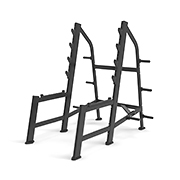
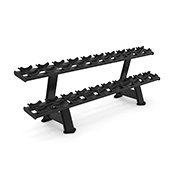
A squat rack is a sturdy steel training frame designed to support a barbell during compound strength movements, most commonly barbell back squats. Often confused with a full power rack, basic squat racks feature upright posts, adjustable J-hooks to hold the bar, and safety spotter arms or pins that stop the bar if a lifter cannot finish a rep. It is one of the most valuable investments for home gyms and commercial fitness facilities because it lets people train heavy without relying on a spotter. Beyond squats, lifters use it for bench presses, overhead presses, rack pulls and lunges, making it a versatile core piece for full-body strength training.

Proper setup is the foundation of safe squat rack training, and skipping this step leads to most gym injuries. First, adjust the J-hooks so the barbell rests at your upper chest or mid-shoulder height when you stand inside the rack. At this setting, you only need a small upward movement to unrack the bar, rather than tiptoeing or deep squatting to lift the weight. Next, set the safety bars 1 to 2 inches below the lowest position your bar reaches at the bottom of a squat. Test this height with an empty bar before adding plates: the safety arms should catch the bar if you fail a rep, without blocking your normal squat range of motion. Always inspect bolts, hooks and safety pins before loading weight, and never exceed the rack’s listed maximum load capacity.
Once the rack is adjusted, follow a consistent step-by-step squat routine. Step under the bar so it rests across your upper traps, not directly on your neck or spine. Grip the bar firmly, brace your core hard, and keep your chest up. Stand to unrack the bar, then take only one or two small steps backward to clear the J-hooks. Too many backward steps make reracking the bar far harder when your muscles fatigue. Set your feet shoulder-width or slightly wider, toes turned out 15 to 30 degrees. Lower slowly by pushing your hips back and bending knees, keeping knees tracking in line with your toes. Descend until your thighs reach parallel to the floor, then drive firmly through your heels to stand back up.
Reracking correctly is just as critical as the descent and lift. After finishing your set, stay braced and controlled, and walk straight back toward the rack uprights. Align the bar evenly with the J-hooks before lowering it gently into place. Do not drop or bounce the bar onto the hooks, as this can damage equipment or cause the bar to slip unexpectedly. If you cannot complete a rep, do not panic. Simply lower the bar steadily onto the pre-set safety bars, release tension, and step out safely from underneath.
Many new lifters make avoidable mistakes when using a squat rack. The most common error is skipping safety pins to save time, which creates serious risk when lifting heavy loads. Other frequent issues include setting J-hooks too high or too low, letting knees cave inward during squats, overloading the rack beyond its rating, and rushing reps with poor form. Always warm up thoroughly with bodyweight squats and light barbell sets before working up to heavy weights. Progress weight gradually, and stop immediately if you feel sharp joint pain rather than normal muscle fatigue.
Whether you are building a compact home gym or outfitting a commercial fitness center, a squat rack unlocks safe, effective barbell training. Mastering proper setup, controlled movement and consistent safety habits protects you from injury while helping you build leg strength, core stability and overall lifting confidence. With careful practice, the squat rack becomes not just a piece of equipment, but the centerpiece of your long-term strength journey.