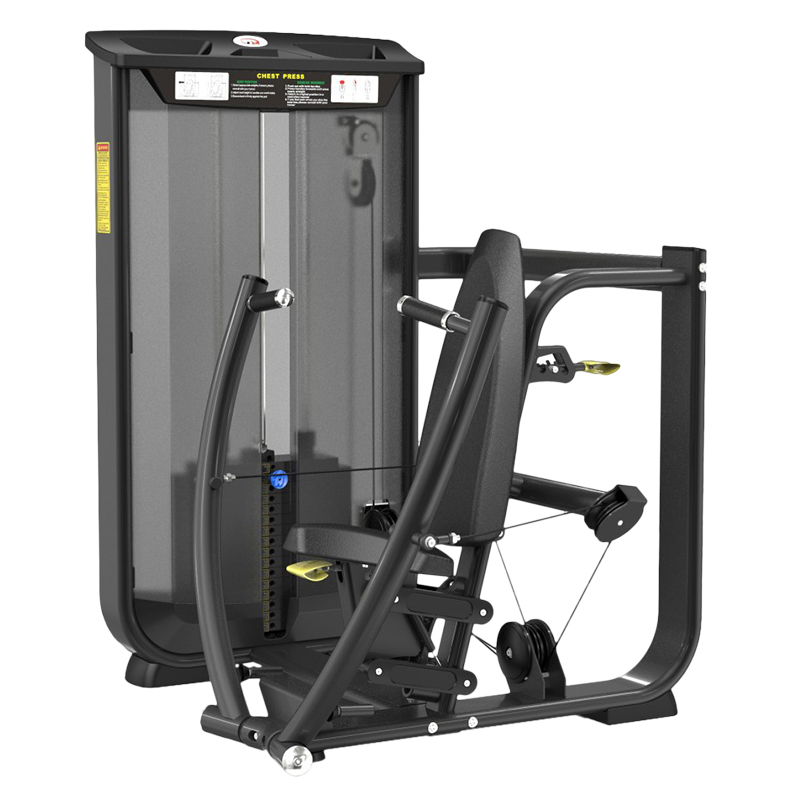
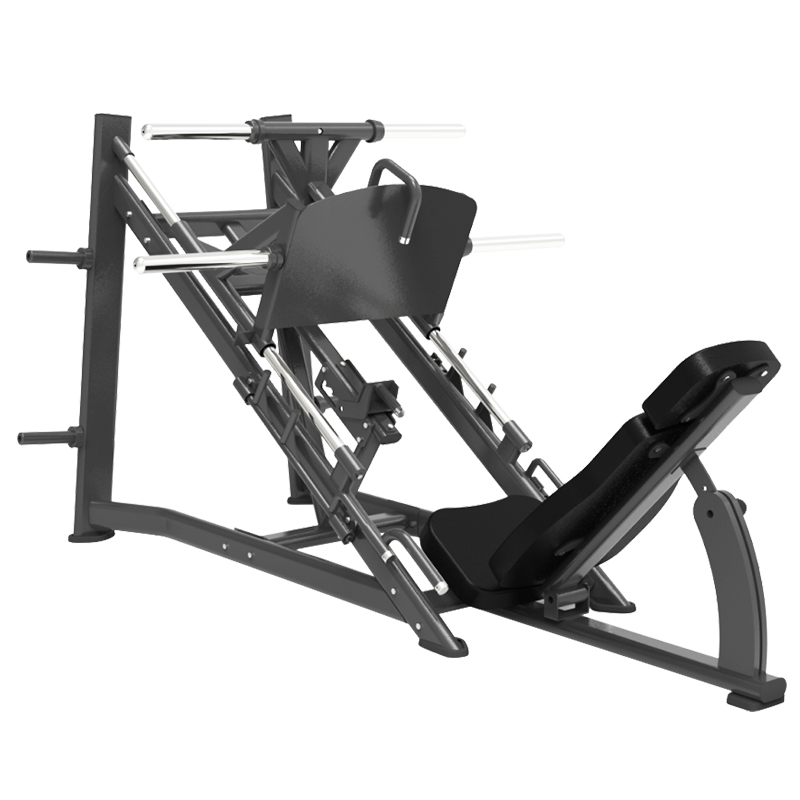
If you walk into any commercial gym, you will likely see two popular leg press machines: the 45-degree leg press and the horizontal leg press. Many new gym users confuse these two pieces of equipment, assuming they deliver identical training effects. While both machines allow you to load weight for leg training with back support and reduce spinal pressure, their body positioning, muscle activation, training difficulty and applicable crowds differ greatly. Understanding these distinctions can help you pick the right machine to match your fitness goals, whether you want muscle hypertrophy, pure strength training or low-impact leg workouts.

The most obvious difference lies in the body posture and mechanical angle. On a 45-degree leg press, users sit at an inclined angle, with the torso tilted upward at roughly 45 degrees relative to the ground. This semi-upright position shares some biomechanical similarities with traditional squats. The horizontal leg press requires users to lie almost flat on a horizontal bench, pushing the plate forward horizontally. The horizontal setup creates a more direct linear load on the lower limbs, while the 45° design introduces slight vertical compression on the spine, though far less than barbell back squats.
Muscle activation patterns also separate the two machines. The 45-degree leg press is flexible for muscle targeting. Adjusting foot placement easily shifts tension between quads, glutes and hamstrings, making it a well-rounded option for overall lower-body development. In contrast, the horizontal leg press puts heavier emphasis on the quadriceps. The flat lying position limits hip extension, so glutes and hamstrings receive far less stimulation. If your main goal is to build bigger quads, the horizontal leg press can be a more targeted choice.
When it comes to training difficulty and safety thresholds, they suit different groups. The 45-degree model is more beginner-friendly and versatile. Its upright posture makes it easier to control movement, and it works well for people recovering from mild knee or back discomfort under proper loading. The horizontal leg press can handle extremely heavy loads, which appeals to advanced lifters chasing lower-body max strength. However, its flat position may increase pressure on the lower back if users arch their spine excessively, and improper foot alignment raises knee injury risks.
So which one should you use? Choose the 45-degree leg press if you are a beginner, want balanced leg growth, need versatile foot adjustments, or prefer moderate spinal load. Go for the horizontal leg press if your primary target is quad development and you are an experienced lifter aiming for heavy progressive overload. Many gym trainers also recommend rotating between both machines in one training cycle to hit leg muscles from varied angles and avoid training plateaus.
Neither machine is universally superior. The best choice always depends on your training objectives, fitness level and physical condition. Master the correct form on whichever you select, and avoid overloading weight at the cost of movement quality.