If you are building your lower body workout routine, you have likely wondered whether you should prioritize the hack squat or the goblet squat. Both are popular squat variations that build leg strength, yet they deliver very different training effects, and each one shines for distinct fitness goals. Understanding their key differences will help you select the right movement for your training level, body type, and objectives.

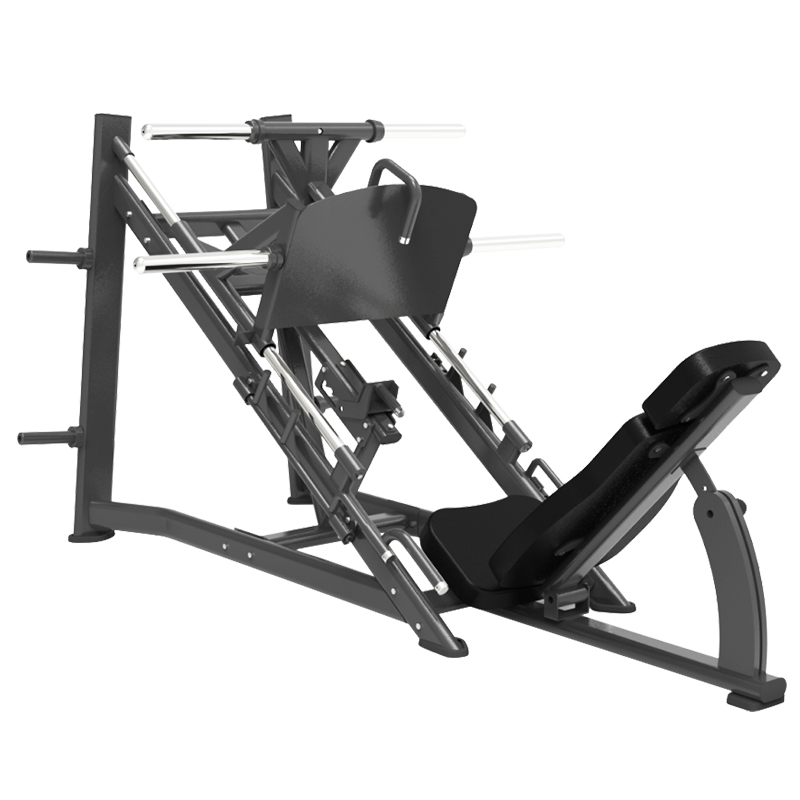
The hack squat is performed on a dedicated hack squat machine. You stand with your back firmly against the padded backrest, place your shoulders underneath the shoulder pads, and push the platform upward using your legs as you extend your knees and hips. Because the machine stabilizes your torso, your core does not have to work hard to keep your trunk upright. This allows you to load a substantial amount of weight onto your quads.
The hack squat heavily targets the quadriceps. Your glutes and hamstrings get secondary stimulation. Since your back is supported, it is an excellent option for people who want to push heavy loads without straining the lower back. However, the fixed movement path of the machine can place extra stress on the knees for some trainees, especially if knees drift too far forward over the toes.
The goblet squat is a free weight squat variation that requires only a single dumbbell or kettlebell. You hold the weight vertically at chest level, cupping one end of the weight with both hands. From there, you lower your hips down and back into a deep squat, keeping your chest up, before driving through your heels to stand back up.
As a free weight exercise, the goblet squat forces your core, stabilizer muscles in your hips, and your upper back to work continuously to maintain proper posture. It hits the quads, glutes, hamstrings, and even your deep core muscles. Goblet squats are fantastic for mastering squat form. They are very accessible for beginners, as you do not need a large machine. The main limitation is that you cannot safely use extremely heavy weight, so progressive overload becomes harder once you have built a solid base of strength.
Hack Squat Pros
· Allows heavy loading for quad growth
· Reduces lower back fatigue during leg training
· Easy to adjust weight for quick set changes
Hack Squat Cons
· Requires gym only machine equipment
· Potential knee discomfort if your technique is poor
· Less activation for core and stabilizer muscles
Goblet Squat Pros
· Minimal equipment needed; great for home gyms
· Builds movement pattern, hip mobility, and core stability
· Lower injury risk when performed correctly, friendly for beginners
Goblet Squat Cons
· Weight ceiling limits maximal leg strength gains
· Challenging to maintain upright posture at higher resistance
There is no universal “better” choice between hack squat vs goblet squat. Your decision depends on your goals.
If your primary goal is to build bigger, stronger quadriceps and you have access to a gym, the hack squat is a wonderful tool. It lets you push heavy volume without fatiguing your back early in your leg workout. Just keep an eye on your knee alignment to avoid joint pain.
If you are a beginner working to refine your squat mechanics, training at home, or trying to improve hip mobility and core stability, goblet squats are your better pick. Even advanced lifters can use goblet squats as a warm up or accessory movement to fix squat flaws.
You do not have to choose only one! Many effective leg workouts include both: use heavy hack squats as your main compound movement, then add sets of goblet squats to reinforce proper movement patterns and hit your stabilizer muscles.
The hack squat excels at heavy quad hypertrophy work on a machine, while the goblet squat builds foundational squat technique and full body stability with simple free weights. Whether you want to maximize muscle growth, learn proper squat form, or design a well rounded leg day, integrating both exercises into your program can deliver superior lower body results.