If you are designing your leg‑day workout routine, two popular gym machines often create confusion: the pendulum squat and the hack squat. Both are excellent machine‑based squat alternatives that reduce lower‑back strain compared to barbell back squats, yet their movement patterns, muscle activation, and training benefits are noticeably different. Understanding these differences will help you select the right exercise based on your fitness goals, existing injuries, and strength level.

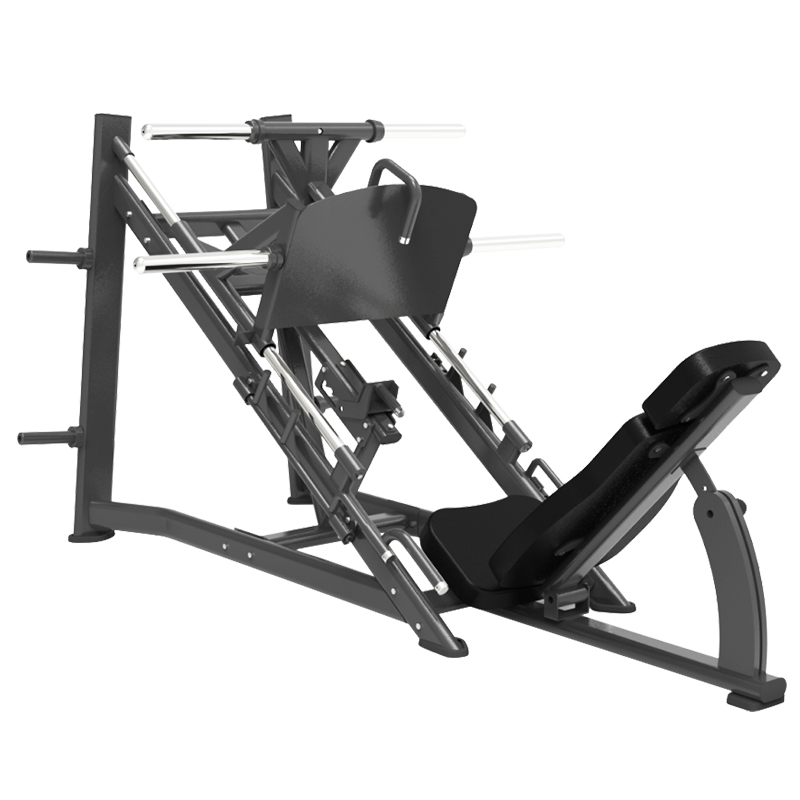
The most fundamental distinction lies in their movement paths. A hack squat sled slides along a fixed, straight inclined track, usually at an angle between 35 and 45 degrees. Your body stays pressed firmly against the back pad as you push the sled upward. Resistance remains consistent through the entire range of motion, with the deepest bottom position often being the hardest point of the repetition. On the other hand, the pendulum squat uses a pivoting swing arm to create a natural arcing movement, which closely replicates the motion of a free‑weight squat. Thanks to its counter‑balanced mechanical design, the pendulum squat reduces loading at the bottom of the squat and gradually increases resistance as you drive your body upward to the standing position.
These unique movement curves directly change muscle activation. The classic hack squat tends to put primary stress on your quadriceps. Because your torso stays reclined against the back support, hip flexion stays limited, so glutes and hamstrings receive relatively less stimulation. This quality makes the hack squat a favourite among lifters who want to isolate and build bigger quads. The pendulum squat, in contrast, permits a deeper squat position. The arcing path allows more hip movement, so glute and hamstring muscles work harder alongside the quadriceps, delivering more complete lower‑body muscle engagement in one single exercise movement.
When it comes to loading capacity and safety, the hack squat generally allows you to stack heavier weight plates. The solid back pad provides full torso support, so intermediate and advanced lifters can push for higher leg strength safely. However, deep bottom positions on a heavily loaded hack squat can create sharp pressure across the knee joint, which may be uncomfortable for people with pre‑existing knee issues. The pendulum squat machine typically has a lower maximum working weight. Still, its smoother, natural movement arc is often kinder to knee and ankle joints. It also keeps the torso more upright, which is a strong advantage for gym‑goers who struggle with lower‑back discomfort when performing heavy leg work, including beginners returning to leg training after an injury lay‑off.
So which one should you include in your leg workout? Choose the hack squat if your main priority is quadriceps hypertrophy and you want to lift heavy loads to build raw leg strength. If you want deeper squat range of motion, more glute and hamstring activation, and gentler stress on knee joints, the pendulum squat is the better selection. You do not have to pick only one, though. Many experienced lifters program both machines on leg day. Start with heavier hack‑squat sets to build foundational leg strength, then switch to pendulum squats for high‑repetition muscle‑building work.
At the end of the day, your personal body mechanics and injury history should always guide your decision. Test both machines at your gym, pay attention to how your knees and lower back feel, and adjust foot placement on the footplate to find your optimal stance. Whether you use pendulum squat or hack squat correctly, you can build strong, muscular legs without relying