If you are trying to build stronger rear shoulders, improve rounded‑forward posture, and protect your rotator cuff during weight training, two staple exercises rise to the top: the face pull and the rear delt fly. Many gym‑goers treat these movements as interchangeable, yet they place unique stress on your shoulder girdle, deliver distinct muscle activation, and fit different training goals. Understanding their differences will help you design smarter upper‑body workouts and avoid common shoulder overuse injuries.

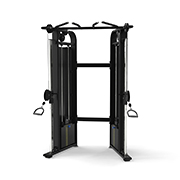
The **cable face pull** is a compound‑focused accessory pull movement. Performed with a rope attachment on a high cable, you pull the rope toward your forehead while spreading the rope ends outward. This motion combines scapular retraction and shoulder external rotation. Beyond your rear deltoids, the face pull heavily engages the middle and lower trapezius, rhomboids, and the small stabilizing muscles of the rotator cuff. Because multiple muscle groups work in tandem, you can use comparatively heavier loading. A major benefit of face pulls is posture correction. For people who spend long hours sitting at a desk or leaning over a phone, regular face pull training counteracts rounded shoulders. Beginners often adapt to this movement quickly, as it builds stable shoulder‑joint awareness.
On the other side, the **rear delt fly** is an isolation exercise targeting primarily the posterior deltoid. You can perform rear delt flies using dumbbells, a bench, or a low cable machine. In the bent‑over variation, you hinge at the hips, keep a slight bend in your elbows, and sweep your arms out to the side, like spreading your wings. Since this movement aims to isolate the rear shoulder, you must use lighter weights. The main advantage of rear delt flies is the focused hypertrophy stimulus for the rear delts. Many lifters have underdeveloped rear shoulders, creating an imbalanced, rounded shoulder appearance. The long movement arc of the rear delt fly keeps tension on the rear deltoid through most of the range of motion, making it ideal for chasing muscle growth in that stubborn area. It recruits far less of the mid‑trapezius compared to face pulls.
Now, how do you decide which one to prioritize in your weekly routine?
Choose **face pulls** if your top priorities are shoulder‑joint health, fixing poor desk posture, adding moderate‑weight pulling volume, and strengthening your entire upper‑back stabilizer complex. This makes them an excellent warm‑up or prehab movement before heavy pressing workouts such as bench press or overhead press.
Select **rear delt flies** when your primary goal is targeted rear‑delt muscle growth. If you already have decent upper‑back strength but your rear shoulders lag behind the front and side delts, dedicate sets to rear delt flies.
You do not necessarily have to pick only one. Most well‑rounded shoulder programs include both. Use face pulls earlier in your workout with moderate weight for 3–4 sets of 12‑15 reps, then move on to lighter rear delt flies later, for 3 sets of 15‑20 reps.
A final critical note: bad form ruins results and causes shoulder pain. For face pulls, avoid yanking the rope hard into your face. For rear delt flies, do not swing heavy dumbbells using momentum. Slow, controlled movement always wins. Whether you select face pull, rear delt fly, or both, consistent rear‑shoulder work will reward you with healthier shoulders, better posture, and a more complete, balanced upper‑body physique.