If you have spent time mapping out your leg day, you have probably wondered: hack squat vs leg press — which one is better for muscle growth and raw leg strength? These two iconic gym machines are go-tos for lower-body training, yet they deliver vastly different stimulus to your legs, spine, and stabilizer muscles. There is no one-size-fits-all winner. Knowing their strengths, limits, and ideal use cases helps you craft safer, more effective training.

The hack squat follows a squat-like movement path guided by fixed rails. You lean back against a weighted sled, settle your shoulders under the supports, and bend at the knees and hips to lower your body before pressing upward through your heels. Your torso stays upright through the whole rep, making this a naturally quad-dominant movement. It prioritizes the four heads of your quadriceps, while also calling on your glutes, hamstrings, hip stabilizers, and deep core muscles to hold form. It strips away the balance challenge of a barbell back squat, which makes it a fantastic stepping stone for lifters working to master squat mechanics. Even so, it still creates steady axial load along the spine, so it is not completely gentle on your lower back.
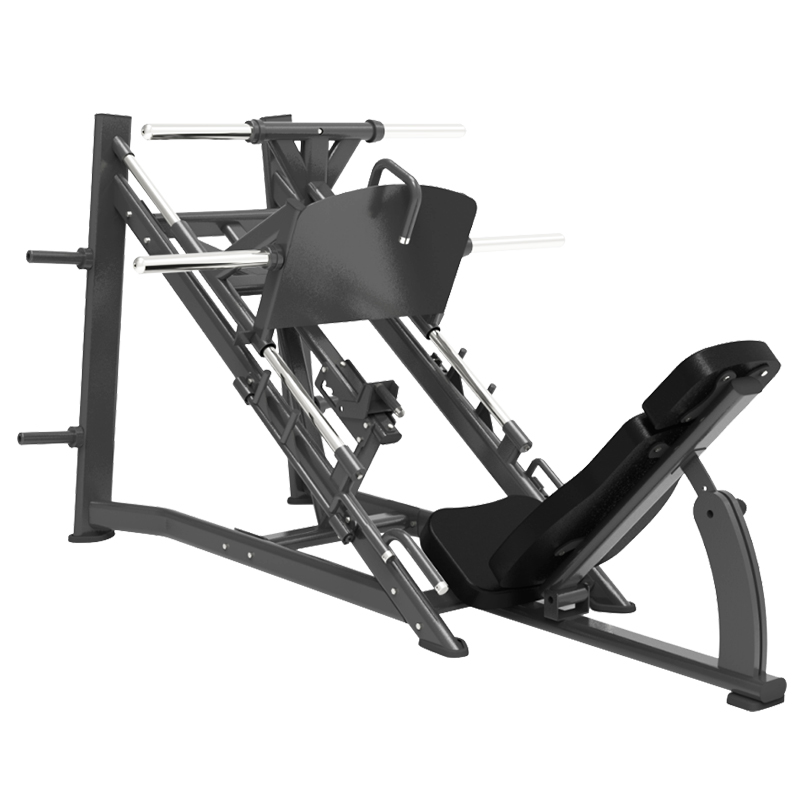
The leg press is a seated, supported alternative. Your entire back rests against an angled cushion as you push a weighted foot platform away from your frame. Since your torso is fully braced, spinal compression is kept very low. This is its biggest selling point: lifters with back discomfort, rehab clients, and anyone chasing huge training volume can load up far more weight here without straining the lumbar region. You can easily shift muscle focus by adjusting your feet: placing feet high on the board ramps up glute and hamstring activation, while a lower foot placement pushes tension straight into your quads. It shines for high-rep pump sets and metabolic work, but because your body is anchored, it barely challenges the smaller stabilizer muscles.
When comparing muscle activation, the upright posture of the hack squat consistently delivers stronger quad engagement. The leg press gives you more control over where the load lands, yet it transfers poorly to real-world squat strength. Pick the hack squat if you want to build squat pattern strength, reinforce quad dominance, or bridge the gap toward free-weight back squats. Choose the leg press when your main goals are hypertrophy volume, heavy loading, or protecting a sensitive spine.
You do not need to choose only one. Many well-rounded leg workouts pair them strategically. Start with hack squats as your primary compound lift to build raw quad strength, then finish with leg press for extra volume and muscle fatigue. Watch for frequent errors: avoid locking your knees fully at the top of the leg press, and do not drop too deep in the hack squat, which can tuck your pelvis and trigger lower-back strain.
Ultimately, the hack squat and leg press work best as teammates, not competitors. Your injury background, training targets, and movement comfort should guide your selection. When programmed wisely, both can build bigger, stronger, more resilient legs.